
Precision Rifle Training
Build a sound foundation.
Make every session count.
An introduction for adults who want structured coaching in precision rifle skills, equipment, and purposeful practice. Safe firearm handling is part of the training.
My training philosophy
Reduce the cone of fire.
Increase accuracy.
My approach is to develop the whole shooting system and help you understand what has the greatest effect on your results.
The cone of fire describes the spread of shots produced by that system. My training focuses on reducing that spread by developing rifle accuracy, ammunition selection, shooter fundamentals, and positional stability. An overarching understanding of ballistics and environmental effects ties those elements together.
- 01 Rifle accuracy
- Understand the rifle’s baseline performance and how equipment consistency supports your progress.
- 02 Ammunition selection
- Understand how the ammunition you choose works with your rifle and contributes to consistent results.
- 03 Shooter fundamentals
- Develop repeatable fundamentals and recognize how your own consistency affects the spread of your shots.
- 04 Positional stability
- Develop stable, repeatable shooting positions and understand how your position and support affect your results.
- 05 Ballistics & the environment
- Build an understanding of ballistics and how wind and other environmental conditions affect bullet flight. Use that understanding to interpret your results and connect what you observe with the rest of the shooting system.
Learn to diagnose your own results.
My goal is for you to identify problems, recognize areas for improvement, and prioritize the changes that will have the biggest impact on your cone of fire. You should leave with a clearer understanding of what is limiting your accuracy and where to focus your next practice session.
A measured progression
Start with your setup.
Progress with your skills.
Build a connected approach to rifle and gear selection, D.O.P.E., ballistic tools, positional shooting, and learning from your results. I begin by assessing your firearm handling and experience, then coach you as needed. We review range procedures and equipment and set a clear plan for the session.
Choose the topics that fit your experience and goals. Distance increases only as the range, conditions, and demonstrated skills allow.
Safety and range procedures
Safe handling, range commands, equipment checks, and appropriate target and backstop selection.
Rifle and gear selection
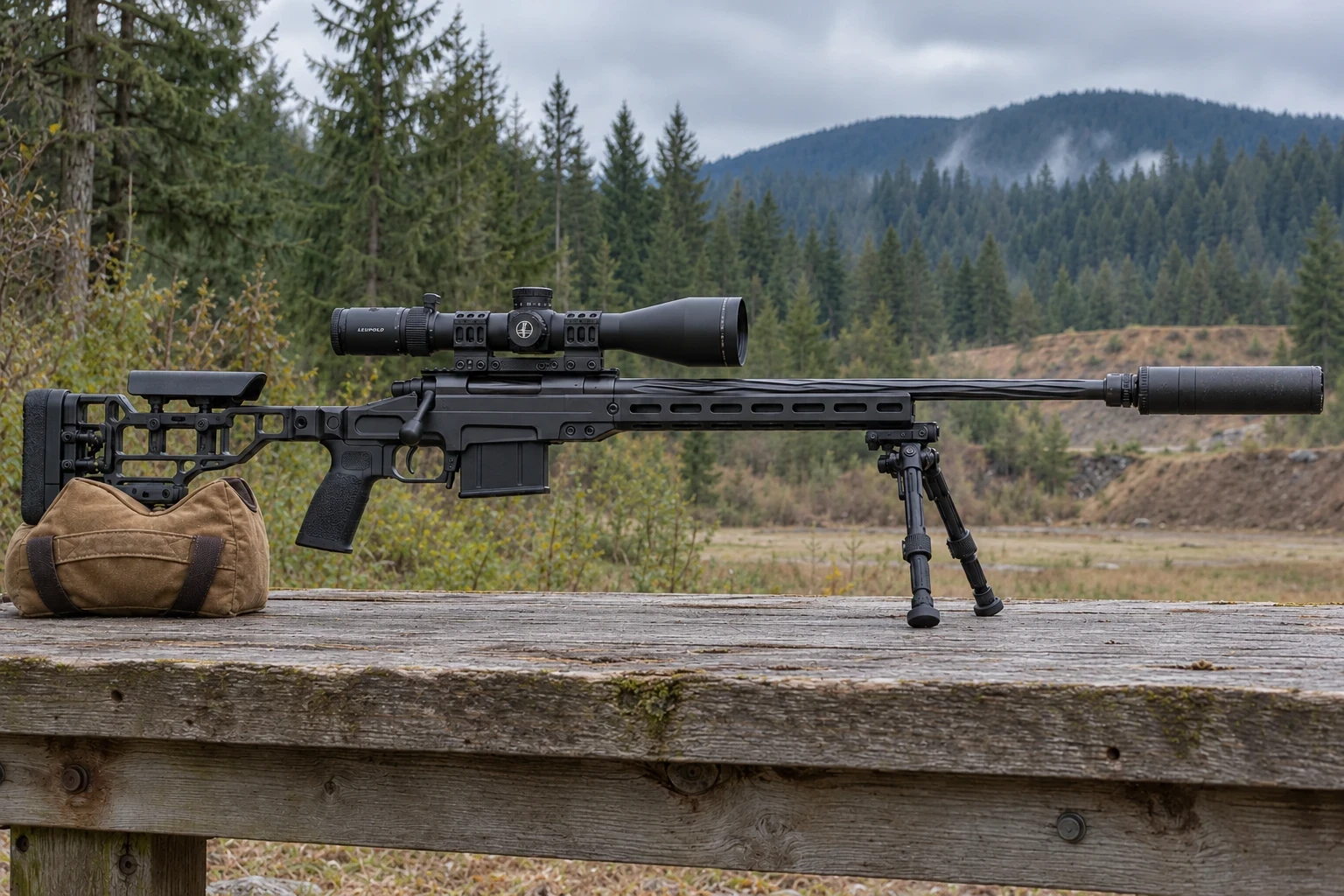
Choose a rifle, optic, ammunition, bipod, rear bag, and supporting equipment that fit your shooting goals. Review rifle fit, optic setup, and the purpose of confirming a zero.
Understanding D.O.P.E.
Understand D.O.P.E. (Data on Previous Engagements): what to record, how to organize it, and how to use your observed results to guide later practice.
Gear integration, solvers and electronics
Learn how your rifle, optic, ballistic solver, rangefinder, weather meter, and other electronics work together. Build familiarity with their roles, settings, and limitations.
Ballistics and wind awareness
Understand what a ballistic solution represents, how range and conditions affect a shooting session, and why observed results matter.
Stable positional shooting
Explore prone, seated, kneeling, and supported standing positions. Practice using a bipod, rear bag, tripod, or suitable range support to develop stable, repeatable positions and consistent fundamentals.
Troubleshooting problems
Connect your observed results with rifle performance, ammunition, fundamentals, positional stability, and environmental conditions. Use an organized review to identify likely causes and choose the area of improvement that will have the greatest effect on your cone of fire.
Collecting data and using it to improve
Keep useful equipment, ammunition, conditions, and performance records. Review patterns over time, compare expectations with results, and choose specific areas for improvement.
Productive and efficient range training
Build each practice session around the factors currently limiting your consistency. Use clear goals and recorded observations to assess progress and decide where your next session will have the greatest impact.
Before the range
Make the details
easy to confirm.
Tell me about your rifle, optic, experience, and goals.
We’ll confirm the venue, range requirements, equipment list, ammunition needs, and group size before booking. Bring your own suitable rifle and ammunition unless another arrangement is explicitly confirmed.
Plan a range sessionIntroduction to long range shooting prices
Dedicated private and paired coaching have the listed session fees. The small group course is limited to 4 students; a booked group of 3 to 4 pays the individual rate times one fewer than its student count. Range fees, ammunition, and agreed equipment costs are separate.
| Course or format | Individual / session fee | Group total / maximum students |
|---|---|---|
| Private introduction3 hours · 1 participant | $200total session fee | 1 student maximum |
| Paired introduction4 hours · 2 participants | $300total session fee | 2 students maximum |
| Small group introduction4 hours | $125per person | $375 total4 students maximum |
The small group course is limited to 4 students. See all prices and inclusions.
Request a rifle class